Geopolitics and supply chains: how buyers map and manage exposure
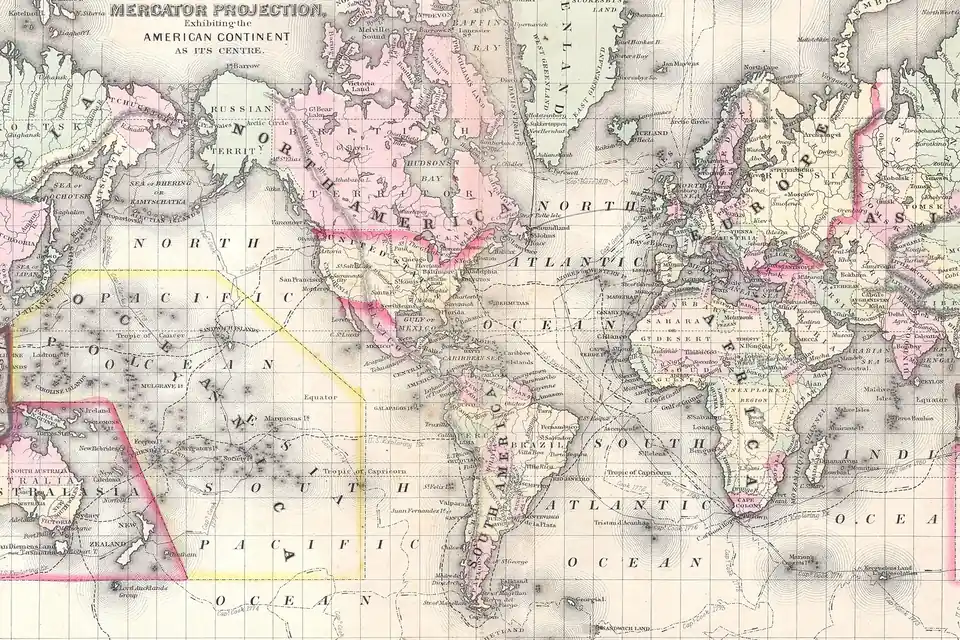
Geopolitical risk rarely arrives as a single event. It reaches a supply chain through a handful of channels (shipping chokepoints, sanctions and export controls, tariffs, industrial policy, and rules on forced labour or carbon) and each channel calls for a different response from procurement. This guide sets out those channels and a method for turning a vague worry into a map of exposure and a list of options.
Why geography still matters to buyers
For several decades, sourcing decisions were optimised mainly for unit cost, lead time and quality, on the assumption that goods could move freely between friendly or at least predictable trading partners. That assumption has weakened. Governments now use trade policy openly as an instrument of security and industrial strategy, and physical routes that carry a large share of world trade have been disrupted by conflict. The practical consequence for a buyer is that where something is made, processed and shipped has become a risk factor in its own right, separate from the financial health or performance of the individual supplier.
The five channels of exposure
1. Physical chokepoints
Maritime trade is funnelled through a small number of straits and canals: the Suez Canal and the Bab el-Mandeb strait at the southern end of the Red Sea, the Strait of Hormuz, the Strait of Malacca, the Panama Canal and the Turkish straits. The US Energy Information Administration describes Hormuz as the world's most important oil transit chokepoint, carrying roughly a fifth of global petroleum liquids consumption (EIA, World Oil Transit Chokepoints). From late 2023, attacks on merchant ships in the Red Sea led many container lines to divert around the Cape of Good Hope, lengthening Asia–Europe voyages by days and absorbing vessel capacity; UNCTAD has documented the effect on transits and freight rates in its Review of Maritime Transport. The Panama Canal had to restrict transits in 2023–2024 because of drought, a reminder that chokepoints can fail for reasons other than conflict.
For buyers, chokepoint risk shows up as longer and less reliable lead times, higher freight and insurance costs, and, under some Incoterms, a direct cost to the buyer rather than the seller. See Incoterms 2020 explained for who bears transport risk under each rule.
2. Sanctions and export controls
Sanctions restrict dealings with named countries, sectors, companies or individuals; export controls restrict the transfer of specific goods, software and technology, especially dual-use items. In the EU, restrictive measures against Russia are set out in Council Regulation (EU) No 833/2014 and its many amendments, and dual-use exports are governed by Regulation (EU) 2021/821. In the US, the Export Administration Regulations (administered by the Bureau of Industry and Security) and OFAC sanctions programmes have reach well beyond US territory, notably through rules on foreign-produced items that incorporate US technology.
The procurement consequence is twofold. First, a supplier may suddenly become one you cannot legally pay, or a component may become one you cannot legally import or re-export. Second, screening is no longer a one-time onboarding check: lists change frequently, and ownership structures can bring an apparently clean supplier under a sanctioned parent.
3. Tariffs and trade remedies
Tariff changes alter landed cost overnight and can change the ranking of competing offers. Anti-dumping and countervailing duties apply to specific products from specific origins and can be very high. Rules of origin matter as much as the headline rate: a product assembled in one country from components made in another may or may not qualify for preferential treatment under a free trade agreement. Buyers should know the customs classification (HS code) and the origin of every significant purchased item, and model landed cost with duties rather than comparing ex-works prices.
4. Industrial policy and resource nationalism
Governments increasingly seek to secure supplies they consider strategic: semiconductors, batteries, critical minerals, pharmaceuticals. The EU's Critical Raw Materials Act (Regulation (EU) 2024/1252) sets a benchmark that, by 2030, no more than 65% of the Union's annual consumption of each strategic raw material, at any relevant stage of processing, should come from a single third country. Producing countries, for their part, sometimes restrict exports of raw or refined materials. For buyers of components containing such materials, the risk sits several tiers upstream and is invisible unless the bill of materials is traced.
5. Values-based trade rules
A newer category of measures links market access to how goods were produced. The US Uyghur Forced Labor Prevention Act, in force since June 2022, creates a rebuttable presumption that goods made wholly or partly in the Xinjiang region are produced with forced labour and are barred from import. The EU has adopted a regulation prohibiting products made with forced labour on the Union market (Regulation (EU) 2024/3015), applicable from December 2027. The EU Carbon Border Adjustment Mechanism (Regulation (EU) 2023/956) moved from a reporting-only transitional phase into its definitive period on 1 January 2026, attaching a carbon cost to imports of covered goods such as steel, aluminium, cement and fertilisers. These rules turn supply chain traceability from a reputational matter into a condition for clearing customs. They are covered in more depth in supply chain due diligence: CSRD, CSDDD and beyond.
Mapping exposure: a practical method
- Start from spend and criticality, not from the news. Use your spend analysis to list categories and suppliers, then flag those where a disruption would stop production or service delivery, whatever their value. A low-cost part with no alternative can matter more than a large commodity spend.
- Record country of origin at each tier you can see. For each critical item, capture where the supplier's own plant is, where key inputs come from and the shipping route. Tier-2 and tier-3 information usually has to be requested; build it into supplier questionnaires and contracts.
- Tag each node against the five channels. Does it pass through a chokepoint? Is the country or company subject to sanctions or export-control regimes relevant to you? Is the product exposed to trade remedies, export restrictions, forced-labour presumptions or CBAM?
- Score impact and likelihood separately. Impact comes from your own operations (weeks of stock, time to qualify an alternative, revenue at stake). Likelihood is a judgement informed by public sources; keep it coarse (low, medium, high) rather than pretending to precision.
- Decide a response per item. Typical options: accept and monitor; hold buffer stock; qualify a second source in a different region; redesign to remove a scarce input; shift Incoterms or contract terms to reallocate risk; or move volume nearer to the point of use.
- Review on a schedule and on triggers. A quarterly review catches drift; specific triggers (a new sanctions package, a tariff announcement, a route closure) should prompt an immediate check of the affected nodes.
Contract levers
Several contract clauses help, provided they are drafted for the specific risk. Force majeure clauses vary widely in what they cover and rarely excuse a supplier simply because performance has become more expensive. Sanctions clauses allow termination or suspension if performance would breach applicable sanctions. Price adjustment mechanisms can tie part of the price to published indices for freight or raw materials. Origin and traceability clauses oblige suppliers to disclose and certify origin and to cooperate with audits. Change-of-control clauses alert you if a supplier is acquired by a party you cannot deal with.
Resilience has a cost, so be selective
Dual sourcing, regional production and safety stock all cost money, and applying them everywhere would erase the efficiency that global sourcing delivered. The point of mapping is to target those measures at the small number of items where exposure and impact are both high, and to make that trade-off explicit to finance and leadership. The supplier risk and resilience guide covers the broader toolkit, including business continuity standards and supplier financial monitoring.
 Suppliers & risk
Supplier risk and resilience
Risk categories, multi-tier mapping, continuity planning and dual sourcing.
 Trade, law & sustainability
Incoterms 2020
The 11 rules, where risk and cost pass to the buyer, and why FOB is often misused.
 Trade, law & sustainability
Supply chain due diligence
What the CSRD, CSDDD and the OECD framework mean for buyers and suppliers.